The autopilot system of the airliner then disconnected, and the co-pilot who was flying at the time pushed his control stick forward after the aircraft’s systems are believed to have generated stall warnings in the cockpit.
New Delhi:
Airbus’s initial reading of the Digital Flight Data Recorder (black box) of the A-320 jetliner, which violently dropped 300 feet on a flight from Phuket to New Delhi, indicated that there was a total, simultaneous loss of key control surfaces, including the elevators and ailerons, for a period of 4 seconds – with the spoilers also lost as a consequence of the same hydraulic failure.
During those 4 seconds, the elevators and ailerons of the A-320 NEO drifted on their own without any pilot command following multiple failures of the jet’s three hydraulic systems, unprecedented in operations of this type of airliner. Hydraulics are critical to the operation of flight control surfaces, namely the elevators which pitch the nose up or down, the ailerons which roll the aircraft left or right by tilting the wingtips, and spoilers which reduce lift, add drag to help the aircraft descend or slow down (including braking on landing).
The autopilot system of the airliner then disconnected, and the co-pilot who was flying at the time pushed his control stick forward after the aircraft’s systems are believed to have generated stall warnings in the cockpit. A stall is a potentially deadly scenario in which the wings of the aircraft stop producing enough lift to keep it flying.
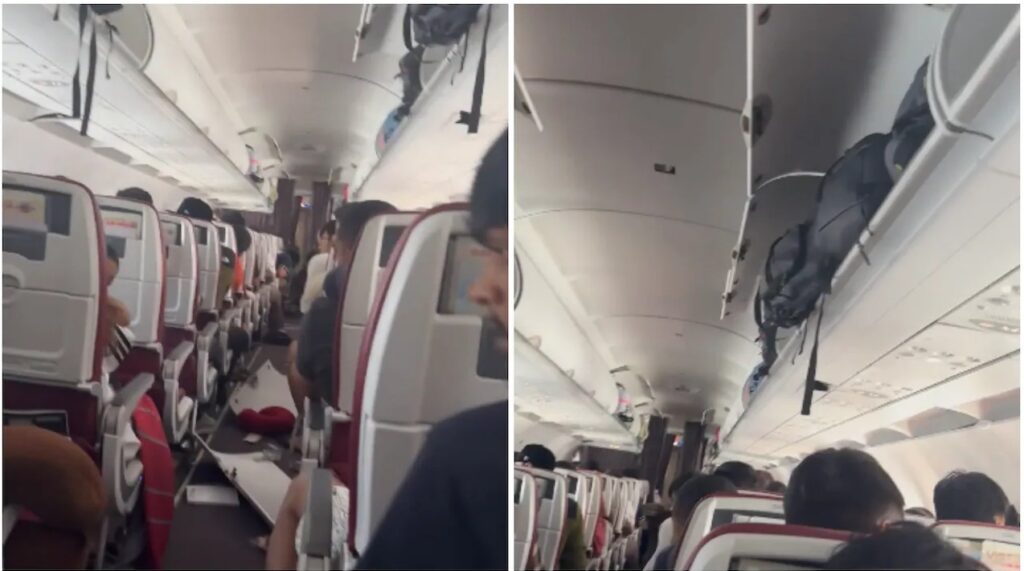
Faced with the prospect of losing control of the aircraft, the co-pilot pushed his side-stick forward to drive down its nose, standard operating procedure when confronting a potential stall. But with no hydraulic power available, his side-stick inputs didn’t translate to any nose-down movement until all 3 hydraulic systems recovered within a few seconds.While this did restore control, the violent nose-down trajectory of the aircraft that followed appears to have caused injuries (some serious) to passengers and cabin crew, many of whom were flung to the roof of the jet.
NDTV has learned that data from the 7.8-year-old A-320 NEO aircraft was transmitted to Airbus’s permanent support centre – AIRTAC (Airbus Technical Aircraft-on-Ground Centre), which runs 24 hours a day, 365 days a year and is based out of Toulouse in France.
While some data may have been transmitted electronically to Airbus through a system called ACARS (Aircraft Communications Addressing and Reporting System), it is likely that the full set of data from the Digital Flight Data Recorder was downloaded by the airline after the jet landed and sent for immediate analysis.
The Airbus dossier with initial findings, which are referenced in this report, was sent back to Air India just after midnight on August 5, about 15-16 hours after the loss of control episode described above.
In its initial report, Airbus linked the emergency on AI-2379 to a possible faulty pressure sensor (a specific hydraulic pressure switch). However, these initial findings did not identify a definitive root cause. Neither did Airbus issue final recommendations.
Since then, experts from Airbus and the French Accident Investigator, the BEA, have arrived in New Delhi and have been able to access the aircraft on Thursday. NDTV has learned that new findings from the preliminary physical examination of the aircraft and its systems have been forwarded to India’s AAIB (Aircraft Accident Investigation Bureau), the nodal agency overseeing the investigation.
There are no observations presently on whether the conduct of the pilot in command of the flight, Captain Sudeep Vashistha, is linked to the serious safety incident on the Phuket-Delhi flight, though those details continue to be investigated. Vashistha failed two urine tests he was asked to undergo after the flight landed. Marijuana has been detected in his system, and a cabin crew member aboard the flight is believed to have submitted a complaint alleging the pilot had earlier smoked ‘pot’.
In the wake of Captain Vashistha testing positive for Marijuana use, Air India has ordered all pilots across Air India and Air India Express to take mandatory tests to confirm the absence of banned substances or medication in their bloodstream